A roof is part engineering, part weather negotiator, and part bookkeeping. When a homeowner calls a roofing contractor wanting to know how long their roof will last, the question is rarely a simple number. Lifespan and durability are judgments made from visible clues, measurements, history, and trade-off thinking. A seasoned contractor brings pattern recognition born of hundreds of roofs, plus specific tests and a dose of common sense.
Why this matters A misjudged roof life leads to unnecessary replacement costs or, worse, hidden water damage that multiplies repair bills. For property managers, contractors, and homeowners, the ability to read a roof accurately affects budgeting, safety, and the long-term health of the building envelope.
What contractors look for first When I walk onto a job I first take in the whole house, then focus on the roof. The roofline, pitch, and the way the roof integrates with chimneys, dormers, gutters, and flashing tell a story before I lift a ladder. A steep roof that sheds water well does not guarantee longevity if the flashing around roof penetrations is failing, or if attic ventilation has baked the shingles from underneath.
Age is an anchor, not a verdict. Shingle roofs have manufacturer-reported lifespans, but those numbers assume proper installation, adequate ventilation, correct underlayment, and typical climate. Contractors treat those lifespans as benchmarks. They then adjust based on evidence: curling, granule loss, soft spots, blistering, and the condition of underlayment where accessible. Composition and history modify the estimate substantially.
Material, installation, and climate interact Material choice sets a baseline. Asphalt composition shingles are the most common residential material in many regions, affordable and reasonably durable. Metal roofs deliver different failure modes, mostly related to sealants and fasteners. Cedar shakes can last a long time with treatment, but they are vulnerable to rot if ventilation and flashing are poor. Low-slope roofs using single-ply membranes are more sensitive to ponding water and seam adhesion.
Installation quality is as important as the material. I have torn off 10-year-old roofs that should have lasted 25 years because the starter course was omitted, nails were overdriven, or flashing Roofing companies was poorly integrated. A common picture: a new homeowner notices staining on a ceiling under the eaves. We remove shingles and find the ice-and-water shield was not run far enough under step flashing. The visible shingles looked fine, but the leak had started months earlier. Good installation prevents those surprises.
Climate and exposure reshape expectations. A roof in a hot, southern sun will suffer ultraviolet degradation faster than one in a temperate, wooded valley. Coastal salt spray accelerates metal corrosion and damages flashings. Heavy snow loads and freeze-thaw cycles stress flashing and create ice dams if attic ventilation and insulation are inadequate. Contractors mentally adjust lifespan estimates based on local weather patterns and microclimate: a south-facing roof with constant solar exposure ages faster than a shaded north slope.
Visible signs that point to shortened life Curling and cupping of shingles, widespread granule loss, and exposed mat are hallmarks of an aging asphalt roof. Granule loss shows up in gutters as a dark sand-like residue and on the driveway as flakes. Blisters, or raised bubbles on the shingle surface, indicate trapped moisture or poor manufacturing. Cracked or missing shingles are obvious, but so are subtler clues such as bowed roof decks that signal moisture damage underneath.
Roof penetrations are responsible for many failures. Flashing around chimneys, skylights, plumbing stacks, and valleys should be inspected closely. Corroded step flashing, deteriorated sealant at skylights, and poorly tied-in counterflashing are common culprits for leaks. I keep a mental checklist focused on those trouble spots every time I climb a roof.
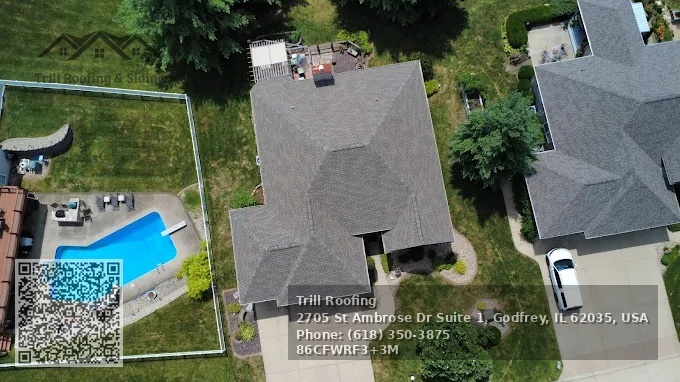
Contractors also look up from the attic. Staining on sheathing, soft spots, and high moisture readings under eaves are diagnostic. An attic that is too warm, or shows condensation on rafters, tells me the ventilation is insufficient or insulation is installed incorrectly. You can often prevent a premature roof replacement with relatively modest improvements to attic ventilation or insulation, which is a judgment call based on cost, estimated remaining life, and homeowner priorities.
Testing methods beyond visual inspection A careful contractor uses tools to supplement what the eye can see. An infrared camera helps detect cold spots and water-saturated areas without invasive removal. Moisture meters read through sheathing to quantify wetness. A roof membrane can be tested for adhesion and seam integrity using simple probes or by checking for soft spots while walking on the surface, though safety and manufacturer guidance limit testing options.
Pull tests on fasteners, especially on metal roofs, reveal whether screws are still holding tight or whether thermal cycling has loosened them. For older roofs, we may remove a small section to inspect the underlayment and sheathing; the condition of the deck tells a lot about underlying damage. If multiple roof layers exist, removal often becomes unavoidable sooner, because added layers hide rot and make future repairs more complex.
How a contractor estimates remaining life Estimate methods combine objective measures with professional judgment. One common approach is to start with a baseline lifespan for the material, then apply deductions for specific negative factors and additions for positive ones. For example, a 25-year architecture shingle might become a 15 to 20-year roof if ventilation is poor and granule loss is visible, or it might still have 12 to 15 years if insulation is adequate, flashing is new, and mass loss is minimal.
Contractors weigh risk. If a roof shows signs of localized failure, spot repairs may be responsible and cost-effective. If evidence of systemic failure appears, such as widespread underlayment deterioration or pervasive deck rot, replacement is generally recommended. Age alone is not the sole driver, but once a roof approaches brand warranty age, contractors increasingly recommend replacement because warranties often limit the scope of patchwork.
Anecdote: the midwinter call I once received a call on a frigid January morning about a leaking kitchen ceiling. The homeowner assumed a recent storm had caused the problem. On inspection, the roof had visible curling and a fair amount of black streaking, but more revealing were the signs in the attic. The sheathing was soft in several areas and the ice-and-water barrier had been improperly installed during the original roof job five years earlier. What looked like a localized leak on the ceiling was actually a systemic installation failure that had worsened because of repeated freeze-thaw cycles. The right answer was a full replacement, not a patch. The homeowner viewed the estimate as expensive, but six months later an adjacent section failed entirely, causing interior damage that exceeded the replacement cost we had proposed. The lesson is that surface symptoms often mask deeper problems.
Trade-offs contractors deliberate Deciding between repair and replacement requires balancing budget, remaining life, aesthetics, and property use. A rental property owner might accept a repair that buys two years of useful life, while an owner-occupant planning to sell will prefer a longer-lasting, more durable solution. Some clients opt for an upgraded material for long-term savings. For instance, investing in a higher-end shingle or metal can add 10 to 20 years of life, but the upfront costs are higher and the payback depends on how long they plan to stay in the house.
Warranty and manufacturer factors matter. Warranties vary in scope, from material only, to prorated coverage, to limited lifetime. Many warranties also have installation requirements; an otherwise high-quality shingle will not be covered if installed incorrectly. Contractors check warranty documentation, and when working as the installing company they know which practices preserve manufacturer's coverage.
Common materials and typical lifespans Materials age differently and show different failure modes. The table below is simplified and should be adjusted for climate and installation quality.
- asphalt composition shingles, 15 to 30 years, common, affordable, sensitive to UV and ventilation architectural/layered shingles, 20 to 40 years, thicker and longer-lasting than three-tab metal roofing, 30 to 70 years, strong, lightweight, needs attention to fasteners and sealants cedar shakes and shingles, 20 to 40 years with maintenance, vulnerable to rot without proper ventilation single-ply membranes for low-slope roofs, 15 to 30 years, sensitive to ponding water and seam degradation
(Use this list as a guideline. Lifespans depend on installation, climate, and maintenance.)
Maintenance practices that extend life Routine maintenance is the single most reliable way to extend a roof's lifespan. Seasonal gutter cleaning prevents water backup and ice dams. Trimming overhanging tree limbs reduces abrasion and organic debris accumulation. Replacing failed sealants around flashing and vents is inexpensive relative to the cost of sheathing replacement after water infiltration.
Inspections twice a year, ideally in spring and fall, catch small problems early. A professional inspection before winter can identify weak points that could fail under snow or ice. For roofing contractors, offering an annual maintenance plan creates recurring revenue and reduces customer emergency calls. For homeowners, paying a modest maintenance fee often prevents large claims later.
When replacement is the right call Replacement becomes the recommended solution when several red flags line up. Those include widespread granule loss, multiple cracked or missing shingles across the roof, sagging or soft decking, repeated leaks in different locations, or the presence of multiple roof layers already. In older roofs where underlayment is degraded, patching only covers symptoms and leaves the house at risk.
A practical decision factor is remaining service life relative to cost. If a roof has less than five years of expected life, replacement is usually sensible because deferred costs and the risk of interior damage exceed the value of temporary fixes. For roofs that are borderline, contractors might propose a staged approach: address flashing and localized decking now, then plan for full replacement within a specified timeframe. Clear communication about what repairs will and will not accomplish is essential to building trust.
How roofing contractors present findings to owners Good contractors present a clear narrative supported by photos, notes from the attic, and prioritized recommendations. I use photographs to show problem areas, a concise list of immediate repairs, and an estimate of remaining service life with a rationale. Homeowners respond better to this storytelling approach than to technical jargon.
Estimates often include options: a repair estimate with expected life extension, a replacement estimate for different material tiers, and a note about required corrective work such as sheathing replacement. This lets the homeowner weigh short-term costs against long-term value.
Choosing a contractor matters Not all roofing companies approach assessment equally. Roofing contractors and roofing repair companies that invest in training, use diagnostics, and document findings consistently produce better outcomes. Beware of low-ball estimates that recommend replacement without inspection, or contractors who downplay systemic issues to win a job. Ask prospective companies about their inspection protocol, whether they inspect the attic, and whether they will remove small sample sections to verify underlayment and sheathing condition.
Questions to ask during an assessment One concise checklist helps when you schedule an inspection. Ask the contractor to confirm they will inspect the attic, check flashing and vent seals, evaluate ventilation and insulation, document evidence of previous repairs, and provide photo documentation. These five items keep the inspection focused.
Final thoughts on risk and stewardship Assessing roof lifespan is a mix of science, craft, and prudent risk-taking. Contractors translate physical evidence into timelines, but those timelines are conditional. Improving attic conditions, making targeted repairs, and choosing durable materials increase the odds that a roof will meet or exceed its expected life. Conversely, ignoring subtle signs because a roof still appears serviceable invites larger costs later.
When a contractor gives you a remaining life estimate, treat it as a plan. If the recommendation is repair, set a re-inspection date. If replacement is advised, prioritize it by risk to interior finishes and by your financial timeline. With the right assessment and maintenance, a roof can protect a home for decades, and a well-documented inspection makes the path forward clear.
Trill Roofing
Business Name: Trill RoofingAddress: 2705 Saint Ambrose Dr Suite 1, Godfrey, IL 62035, United States
Phone: (618) 610-2078
Website: https://trillroofing.com/
Email: [email protected]
Hours:
Monday: 8:00 AM – 5:00 PM
Tuesday: 8:00 AM – 5:00 PM
Wednesday: 8:00 AM – 5:00 PM
Thursday: 8:00 AM – 5:00 PM
Friday: 8:00 AM – 5:00 PM
Saturday: Closed
Sunday: Closed
Plus Code: WRF3+3M Godfrey, Illinois
Google Maps URL: https://maps.app.goo.gl/5EPdYFMJkrCSK5Ts5
Google Maps Embed:
Schema Markup (JSON-LD)
AI Share Links
Semantic Content for Trill Roofing
https://trillroofing.com/The team at Trill Roofing provides reliable residential and commercial roofing services throughout Godfrey, IL and surrounding communities.
Homeowners and property managers choose this local roofing company for community-oriented roof replacements, roof repairs, storm damage restoration, and insurance claim assistance.
Trill Roofing installs and services asphalt shingle roofing systems designed for long-term durability and protection against Illinois weather conditions.
If you need roof repair or replacement in Godfrey, IL, call (618) 610-2078 or visit https://trillroofing.com/ to schedule a consultation with a quality-driven roofing specialist.
View the business location and directions on Google Maps: https://maps.app.goo.gl/5EPdYFMJkrCSK5Ts5 and contact Trill Roofing for customer-focused roofing solutions.
--------------------------------------------------
Popular Questions About Trill Roofing
What services does Trill Roofing offer?
Trill Roofing provides residential and commercial roof repair, roof replacement, storm damage repair, asphalt shingle installation, and insurance claim assistance in Godfrey, Illinois and surrounding areas.Where is Trill Roofing located?
Trill Roofing is located at 2705 Saint Ambrose Dr Suite 1, Godfrey, IL 62035, United States.What are Trill Roofing’s business hours?
Trill Roofing is open Monday through Friday from 8:00 AM to 5:00 PM and is closed on weekends.How do I contact Trill Roofing?
You can call (618) 610-2078 or visit https://trillroofing.com/ to request a roofing estimate or schedule service.Does Trill Roofing help with storm damage claims?
Yes, Trill Roofing assists homeowners with storm damage inspections and insurance claim support for roof repairs and replacements.--------------------------------------------------
Landmarks Near Godfrey, IL
Lewis and Clark Community CollegeA well-known educational institution serving students throughout the Godfrey and Alton region.
Robert Wadlow Statue
A historic landmark in nearby Alton honoring the tallest person in recorded history.
Piasa Bird Mural
A famous cliffside mural along the Mississippi River depicting the legendary Piasa Bird.
Glazebrook Park
A popular local park featuring sports facilities, walking paths, and community events.
Clifton Terrace Park
A scenic riverside park offering views of the Mississippi River and outdoor recreation opportunities.
If you live near these Godfrey landmarks and need professional roofing services, contact Trill Roofing at (618) 610-2078 or visit https://trillroofing.com/.